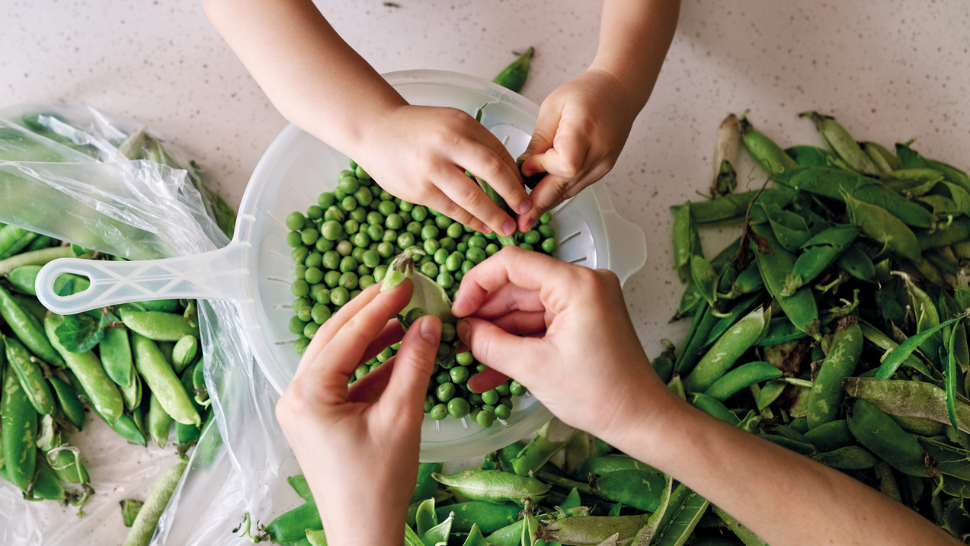
Cooking with kids is equal parts messy and magical, and that’s exactly the point. Beyond the flour-covered counters and sticky fingers, the kitchen becomes a space for developmental growth. From squishing dough to cracking eggs, children can build confidence, independence, and lifelong skills one recipe at a time.
From toddlers tearing lettuce to tweens sautéing vegetables, cooking reinforces a wide range of age-specific milestones including:
| Age | Kitchen Skills | Developmental Benefits |
|---|---|---|
| 2–3 | Rinsing produce, tearing greens, stirring batter | Fine motor skills, sensory play, vocabulary building |
| 4–5 | Measuring ingredients, cutting soft foods with a butter knife | Early math, hand-eye coordination, sequencing |
| 6–8 | Reading simple recipes, cracking eggs, using a peeler | Literacy, independence, following multi-step instructions |
| 9–12 | Chopping with supervision, sautéing, planning meals | Critical thinking, time management, confidence building |
These hands-on activities activate multiple domains of child development simultaneously. They’re learning math through measuring, science through cooking reactions, and literacy through recipe reading, all while gaining a sense of accomplishment. In addition, research shows that children who spend time in the kitchen and participate in preparing meals are more likely to choose fruits and vegetables, encouraging healthy eating habits.
And the best part? Kids often don’t realize how much they’re learning because they’re too busy having fun. Try a simple activity like “banana sushi.” Spread nut or seed butter on a banana, roll it in oats or crushed cereal, then slice it into coins. Kids practice spreading, rolling, and slicing while creating a snack they’re excited to eat.
From burnt food to spilled batter, accidents may happen, just like falling off a bike. Instead of banning riskier tasks such as those that involve sharp tools or heat, consider introducing them intentionally. Start with kid-safe knives and progress as appropriate. Teach your 7-year-old how to curl their fingers into a “claw grip” while chopping (remember to keep the bear, aka your thumb, in its cage!) Or let your 9-year-old learn to turn on the stove under supervision. In the end, cooking together is about more than preparing food. It’s about creating moments of connection, curiosity, and confidence that children carry far beyond the kitchen.